Learn more about The Retrospectre literary world here.
After the Second World War, the threat that was nuclear annihilation encouraged a series of national responses to avoid a repeat of that tragedy. Efforts in intelligence and espionage were more than quadrupled in an attempt to coordinate measures to detect and defend against obliteration. As data-driven sciences became the most important expenditure of the military budget, a nationwide system of communication was formed. Enemy nations began to follow suit, and this was followed by a proliferation of information weapons and network security. The Cold War became the Code War, a hidden sequence of battles where encryption, decryption, network penetration, and digital sabotage were the key activities. Artificial intelligence and then robotics rose to meet the advancement of electronic systems. By the end of the millennium, much of the technology was declassified to the public, commoditized, and made available to the average consumer. Humanity had reached a sharp peak, and then a dramatic inflection point.
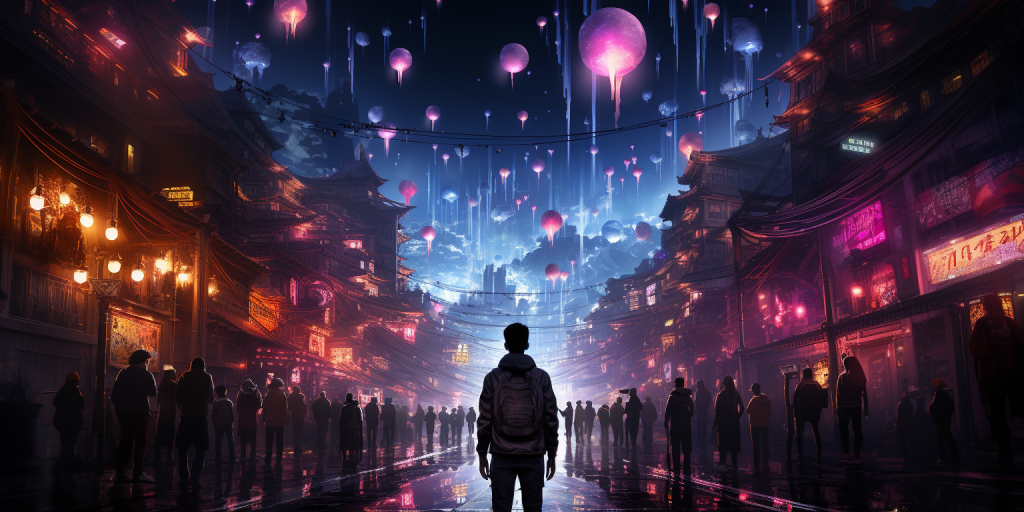
The world of The Retrospectre takes place on a stage of advanced technology at the turn of the century. In the face of its seemingly endless potential, society paved forward with progress in the name of progress, accomplishing all it could without asking once if it should. The procession marched on without conscience and the world at large met the tsunami of advancement with equal energy. In the wake of anti-communist sentiment, capitalism overtook democracy. It became more and more evident that this was a world of systems and had been for decades. But now the systems were moved by automation and intelligence. They were agents in their own right and we, trained by bureaucracy, had offered our lives to them wholesale for the promise of convenience, opportunity, and other illusory crumbs of the American dream. But as it continued, robotics supplanted the laborer and computers displaced the managers. Completely replaced by our own genius we got exactly want we asked for and realized it was never what we wanted. We were tired of being cogs in the machine, but now the machine installed its own parts, and we were merely the grime in the gears.
Struggling to hold on to the remnants of our humanity in an environment built by us but no longer for us, we make do like savage scavengers in an artificial wilderness. Hunters and gatherers collecting scraps trying to imitate civilization in a laughable pantomime, we live by filling in the economic gaps with odd jobs and one-off gigs, or by creating empires of crime or of corporate glut that should be criminal. And we do this besides them, sharing the world with cogs and with gears and all the while denying, in our failing infrastructures and crashing marketplaces, that we are mere decades away from seeing an undeniable new dominant species on the planet.